overview
Stay Cool Squad is a community volunteer program built on the pre-existing City of Vancouver’s Adopt-a-City model, normalizing heat preparedness through proactive community action.
This was an academic group project for a user experience design course, promoting public awareness of extreme heat risks among Vancouver tenants and encouraging individuals to better prepare themselves and those in their care.
what’s the problem?
Based on a survey of 1,000 adult BC residents, we found that 85% fear extreme heat events, and yet 44% say they will deal with it “when and if they need to,” and, 43% believe there is nothing they can do to prepare.
This led us to the research question of “what are the barriers preventing tenants from being aware and prepared for extreme heat events, and what motivates them to act?”
We found that even when cooling resources are accessible, many individuals have concerns regarding social stigma, personal safety, and physical discomfort being around unfamiliar people. This discourages use as people rather stay in their own homes even if the indoor heat feels uncomfortable.
“Our homes are where we find safety [and] recovering from health issues. And I think what we’ve learned is that public spaces [aren’t] where people go for safety.”
We also found that there is a biological unrecognition of heat, and individuals often don’t know the difference between being medically at risk and uncomfortable, due to heat being gradual and familiar (Howarth et al., 2024, Tetzlaff et al., 2025, Madrigano et al., 2018, Ban et al., 2019, Anderson, 2024). BC’s annual temperature has risen 1.4 degrees over the past century often passing without recognition of danger.
“Put a frog in boiling water, and it will jump out. Place that same frog in slowly heated water, it will boil itself alive.”
– Rajalingam (2025)
key insights
From our research of interviews, surveys, articles, and media analysis, we found three driving insights:
People need to feel in control to motivate actions that are deemed inconvenient - and knowledge is essential to their confidence to act.
“Individuals who have low levels of perceived control are typically less confident in their ability to perform a behaviour, and are thus likely to perceive that a large gap exists between their actual and desired ability to achieve the goal.” (Kidwell, 2010, pp. 2411)
Heat preparedness is likely to be more effective when framed as a social norm rather than an individual health recommendation, especially among individuals who seek approval.
“Social norms impose pressure on individual’s assessment of risk information, which consequently drive or prevent behavioral changes, and have been regarded as a critical driver of risk perception and response decision-making.” (Lo, 2013, Renn, 2011, Swim et al., 2010)
When an impact is visible within communities, it can trigger mutual aid among the empathetic individuals.
“Empathy is a strong driver of helping others for no apparent gain to the self.” (Depow et al., 2022)
our stakeholders
People are more motivated to cool their homes when loved ones, dependents, or living things they care for are affected – making carers*, particularly tenants in high-density housing, a key stakeholder group.
*Carers definition: People who have living dependents in their household and feel responsible for their care, such as pets, plants, or children.
In BC, 65% of residents live in apartments, making it the most popular form of living, and the hottest. Multi-unit living in BC has increased, with new homes tripling in the past 2 decades.
In these increasingly hot, densely populated units, weak community connections undermine both preparedness and resilience in high heat scenarios, where the opposite would be expected.
This insight connects strongly to empathy as a driver of behaviour. When combined with social norms around community and belonging, caregiving becomes a powerful motivator.
our key insights led us to wonder…
How might we empower carers to normalize heat preparedness to inspire and motivate socially supported responsibilities in their communities?

Stay Cool Squad for City of Vancouver
A community volunteer program built on the pre-existing City of Vancouver’s Adopt-a-City model, normalizing heat preparedness through proactive community action.
final solution
A community volunteer program that normalizes heat preparedness by mobilizing carers to support their at-risk neighbours through proactive community action.
We decided to leverage Adopt-A-City, a platform City of Vancouver already uses for community volunteering. By using a pre-existing system, we reduce implementation barriers, and it also exposes the program to like-minded, empathetic volunteers who are already active on the platform.
how will this work?
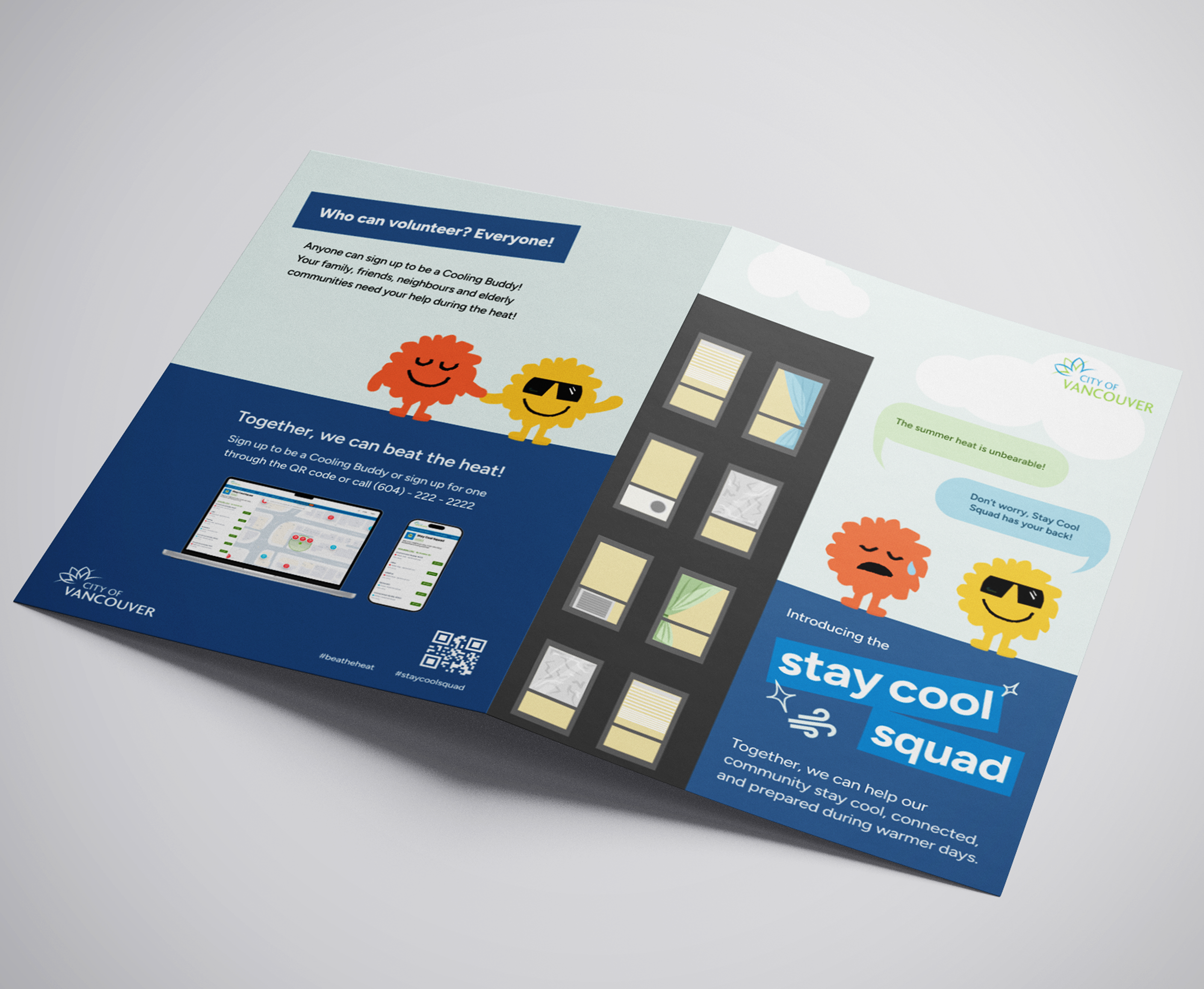
Before the summer heat, we distribute a brochure directly to residents across Vancouver. Sharing information in a private setting helps people feel a greater sense of control, which makes them more open to reflecting on risks and considering preventative actions.
– Goulding R and Loftus E. (2025)
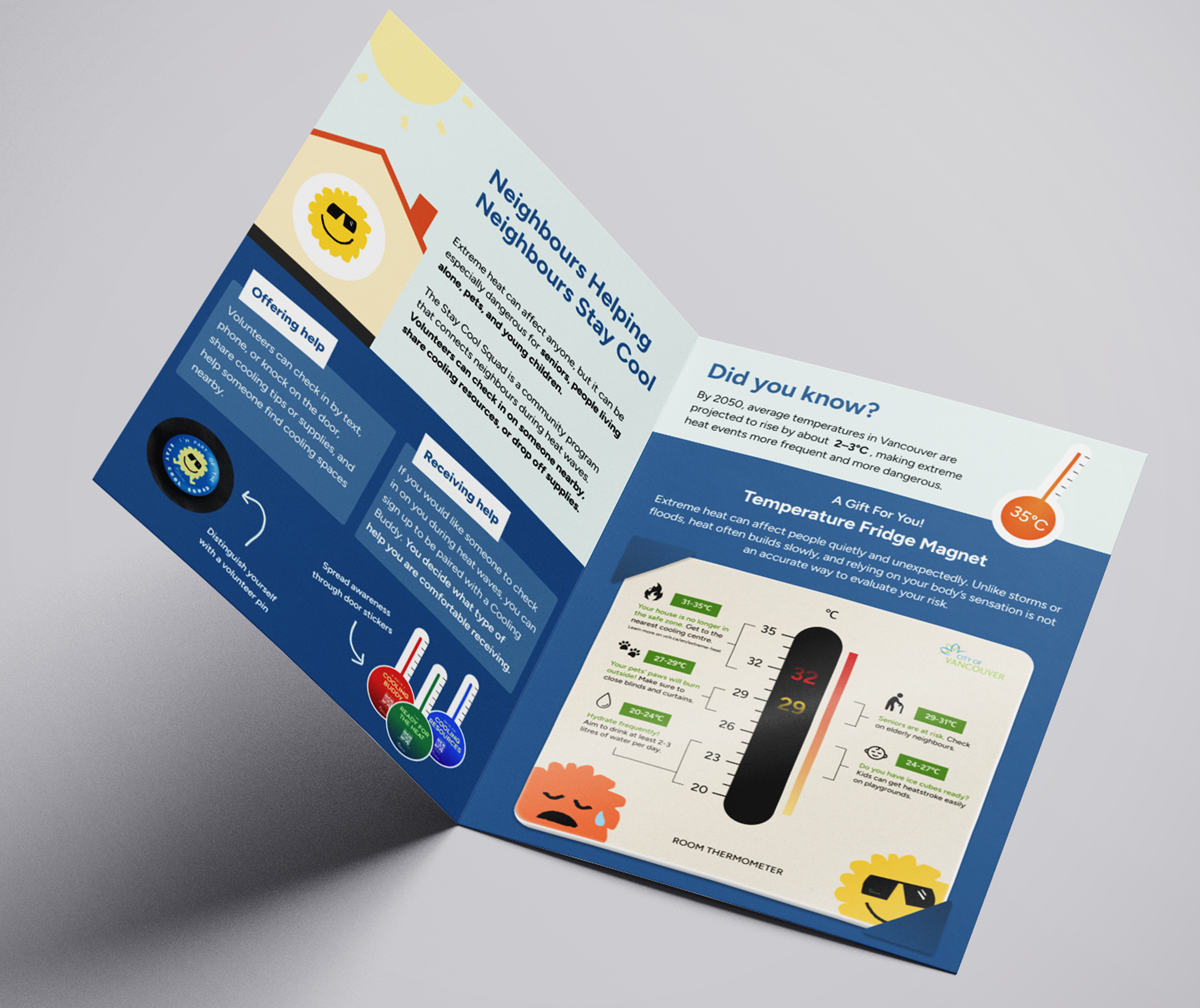
Inside the brochure, residents will see information on the Stay Cool Squad Program, and a thermometer as a gift to provide preventive recommendations.This uses a marketing technique called lumpy mail, which reduces the chance that people throw it away without opening it.
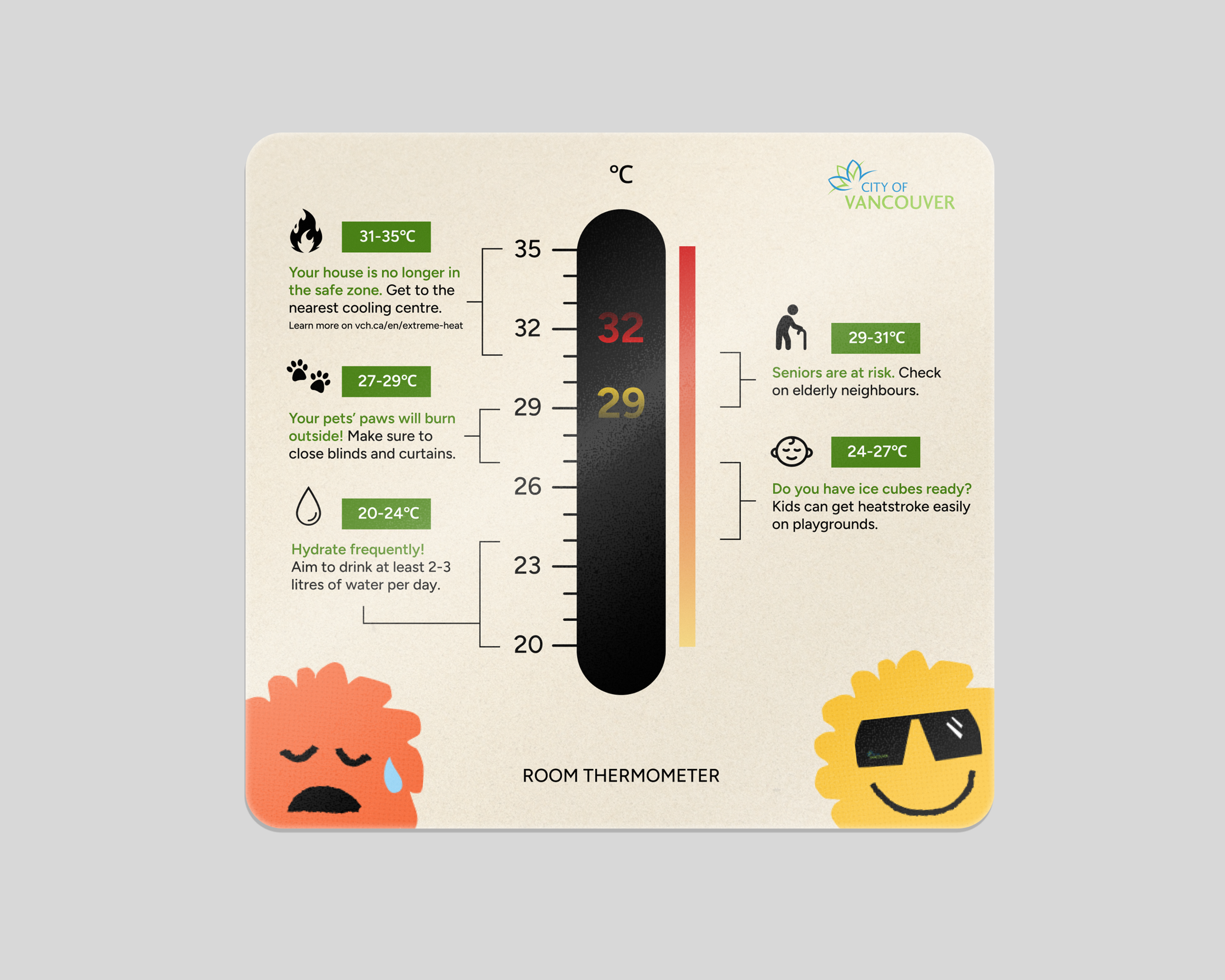
The thermometer emphasizes preventative measures and those at risk at the current temperature they’re at.
People’s perception of heat risk is influenced by their confidence in their ability to follow guidance and by their access to relevant information.
(Tetzlaff et al., 2025, Linnemayr et al., 2016)
Knowledge creates confidence, not urgency nor risk perception. However, feeling informed gives people reassurance that they are prepared and the danger feels manageable, while being able to protect others
(Marlon et al., 2025; Tetzlaff et al., 2025; Union Civil Protection Knowledge Network, 2025; Hao & Peng, 2025; Bedi et al., 2022; Linnemayr et al., 2016; Aarts et al., 1998).
With the confidence and knowledge our previous artifacts have provided, we’re hoping to target empathetic individuals, who can sign up to join the Stay Cool Squad through City of Vancouver’s Adopt A City application.
To start, a volunteer can enroll themselves through the adopt-a platform.
Once they are approved to be a cooling buddy, they can start pairing themselves to their neighbours. As the heat wave approaches, volunteers will receive notifications from City of Vancouver to collect cooling materials (such as temporary window shades, fans, water, and etc) and provide direct recommendations to assist their neighbours to better prepare for the heatwave in their homes.
This reduces the friction for tenants to act proactively as the program has removed social and financial barriers that would normally have prevented people from taking action. Supplies are provided through the City and tenants also receive materials for their own unit.
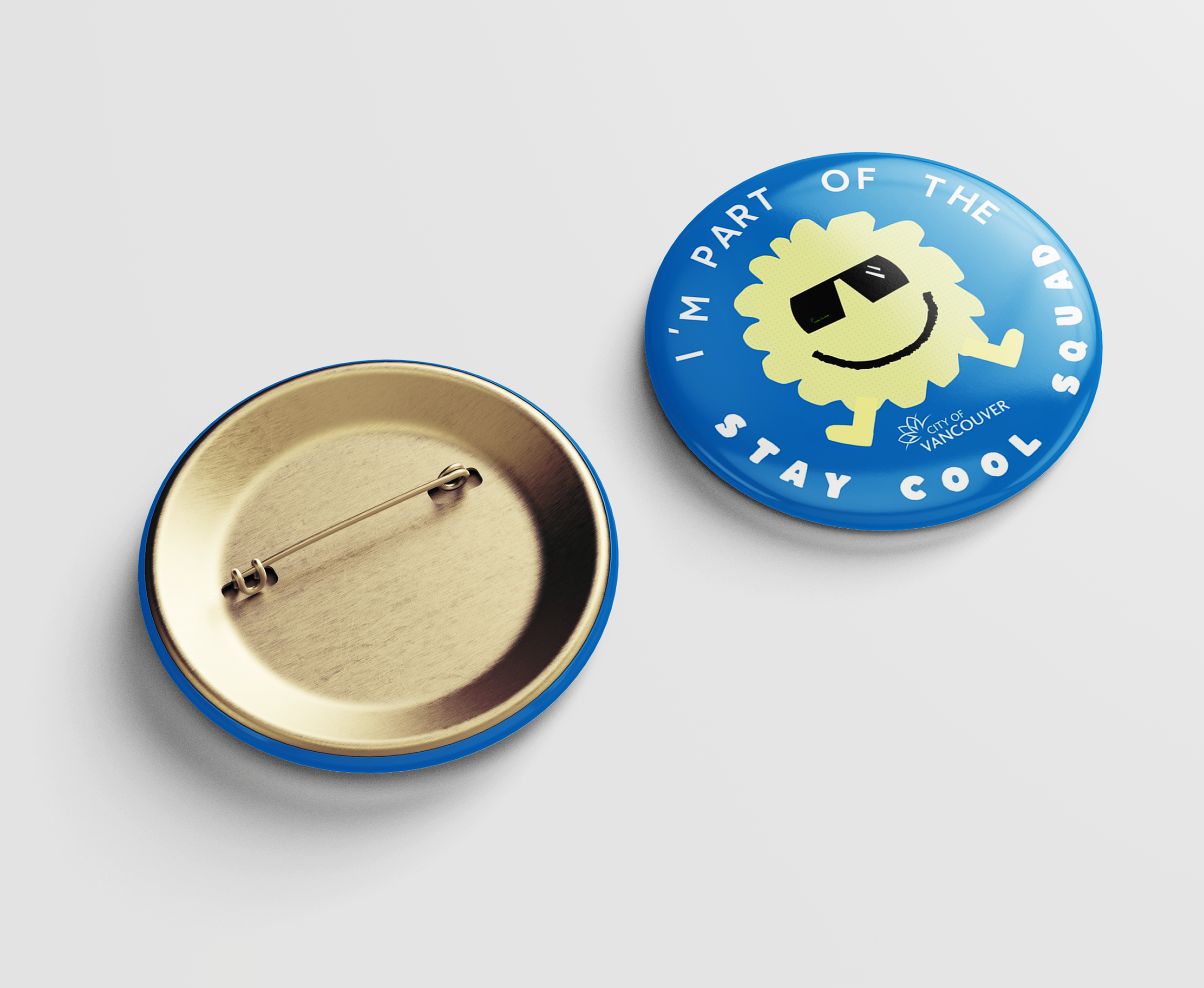
Volunteers will receive sign up gifts from the city such as pins, signalling that they are approved and a safe space, which creates awareness and open conversation.
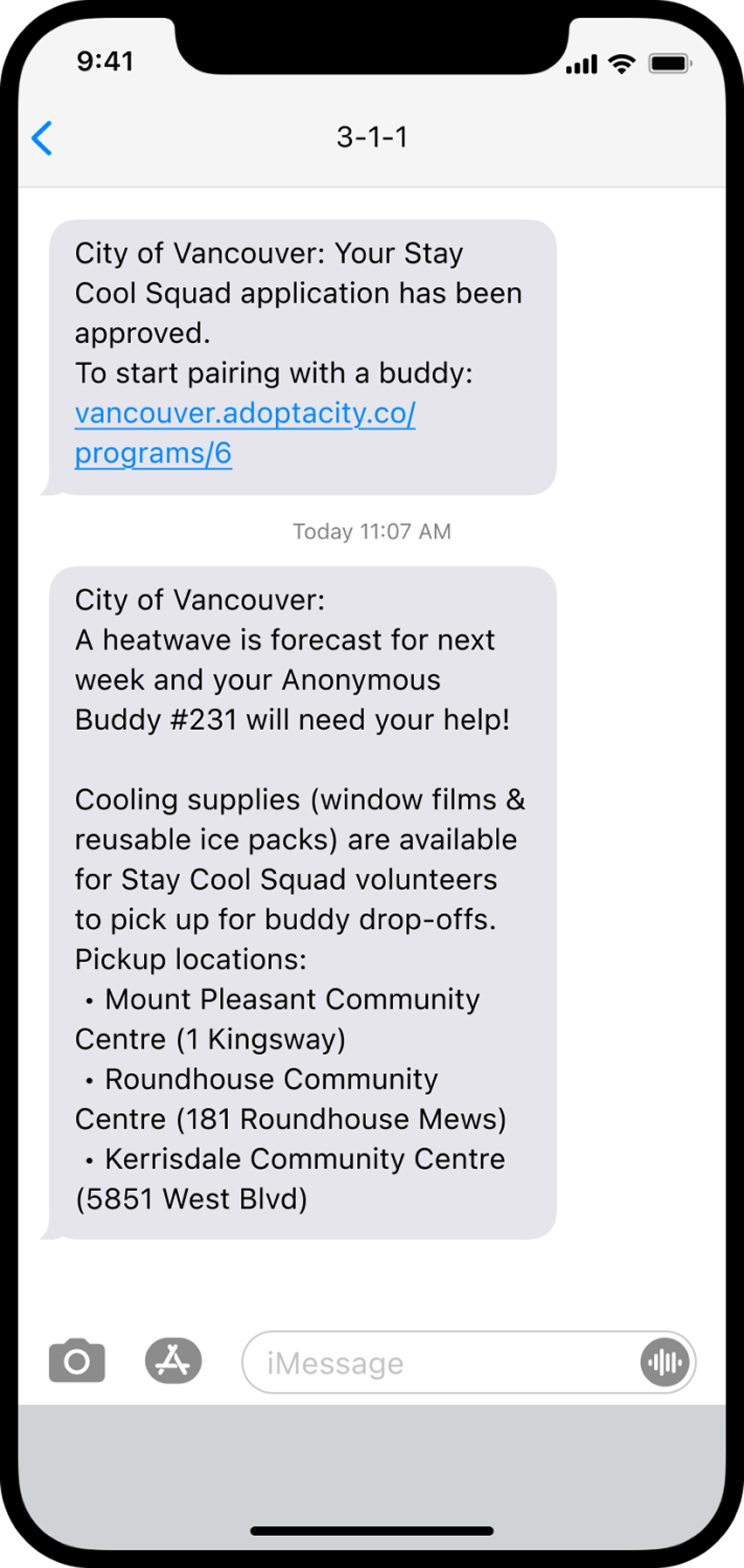
Knowing that neighbours and local organizations are prepared to help can reduce fear and anxiety, making individuals more likely to engage in preparedness activities themselves.
Anderson (2024)
The pin serves not only as an official identifier for volunteers but also helps spark interest and raise awareness as more people display it on their bags or shirts, fostering a social norm around volunteering.
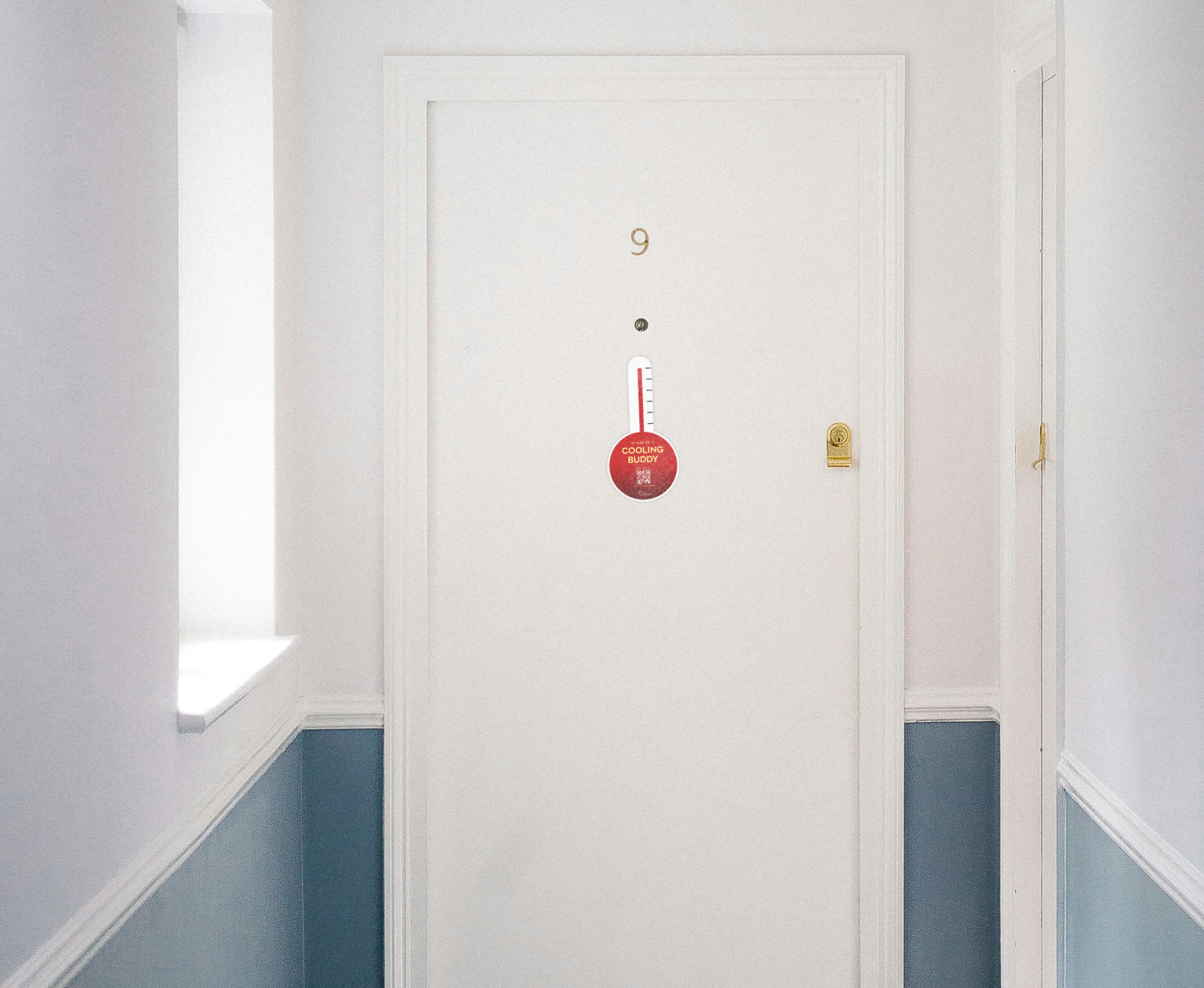
Before and during heatwaves, and during volunteering, residence can identify each other through the stickers on their doors. Drawing back to our driving insight these stickers serve as a purpose of visible participation signals showing that neighbours are involved in preparing for the heat. This helps turn heat preparedness into a community social norm.
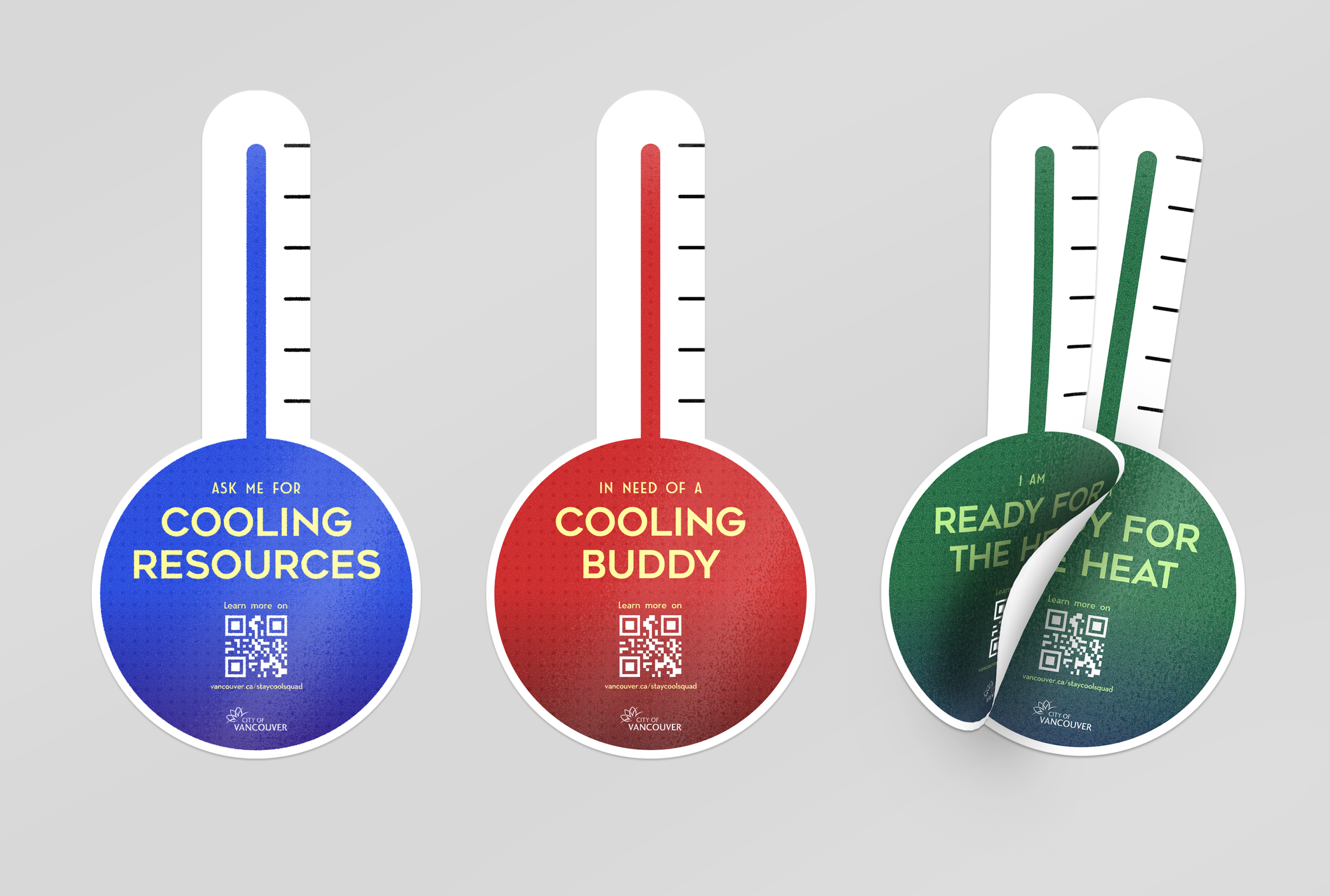
Visible participation signals that neighbours are involved, helping turn heat preparedness into a community social norm, making preparedness more effective.
(Anderson, 2024; Hao, & Peng, 2025; Linnemayr et al., (2016); Ishikawa (2022); Cialdini, 2004).
Removable stickers allow for low-cost social identifier for those who provide and require help.
Including a QR code, surrounding neighbours who constantly have exposure to these can learn about the program.